That familiar tightness in your chest. The second-guessing that creeps in as you wait in the ingate. Even the most seasoned competitors experience nerves before a show. It’s part of caring about how you ride and how you show up in the ring.
However, the goal isn’t to eliminate that feeling. It’s to understand it, prepare for it, and ride through it with clarity.
When you have a plan, both mentally and practically, you give yourself something steady to rely on. Confidence doesn’t come from luck; it comes from preparation.
Understanding Horse Show Nerves: Why They Happen
Nerves don’t show up randomly; they’re a natural response to expectation and the importance you place on your ride. Understanding that response can help you manage it more effectively instead of feeling caught off guard by it.
The Science Behind Performance Anxiety
Your body is wired to respond to pressure. Whether it’s a real threat or a competitive environment, your system reacts the same way: your heart rate rises, your muscles tighten, and your focus sharpens.
For riders, that response matters. Your horse feels subtle changes in your posture, breathing, and energy. Even a small shift in tension can influence how your horse moves and reacts.
What experienced riders understand is that signs of increased arousal can be interpreted as either nerves or excitement. Too much adrenaline leads to mistakes.
That distinction matters enormously. The feeling itself isn’t the problem: how you interpret and manage it shapes your ride.
Common Triggers for Horse Show Nerves
Every rider has different triggers, but a few tend to show up often:
-
Fear of Judgment: You’ve prepared, and now your ride is being evaluated stride by stride
-
High-Pressure Classes: Medals, qualifiers, or finals can raise the stakes
Unfamiliar Environments: New venues can change how both you and your horse feel
-
Past Experiences: A difficult round can linger longer than expected
-
Internal Pressure: Your own expectations can be the loudest voice
Recognizing what affects you most helps you prepare intentionally instead of reacting in the moment.
Pre-Show Preparation: Building Confidence Before You Arrive
What you do before you arrive at the show often shapes how you ride once you’re in the ring. Confidence is built in the small, consistent moments of preparation long before your number is called.
Mental Preparation Strategies
Visualization is a practical tool many riders overlook. It’s not about imagining perfection. It’s about mentally walking through your ride so it feels familiar before it happens.
Sports psychologist Andrew Jacobs describes it as "mentally picturing yourself successfully executing a movement before attempting it,...mentally rehearsing an event in detail, including all sensory experiences tied to the performance."
Spend 5–10 minutes picturing your course or test. Notice the rhythm. Think through your lines. Hear the crowd. Ride every fence clean. Keep it simple and consistent.
Pair visualization with intentional self-talk. Instead of focusing on what could go wrong, bring your attention back to what you know:
-
"I've ridden this course clean in practice," or "my horse and I have the tools for this."
-
Replace "what if I mess up" with "what do I need to execute."
Small shifts in language can help steady your focus.
Set process-oriented goals rather than outcome goals. Focus on what you can control, such as your position, your pace, and your connection, and let results follow from there.
If performance anxiety continues to affect your rides, working with a sports psychologist can be a valuable step. Many top-level athletes rely on this kind of support as part of their regular preparation.
Physical Preparation
Consistency in your riding builds confidence over time. When your body recognizes the work, you don’t have to overthink every moment in the ring.
If possible, give your horse time to settle into the environment before your show day. Familiarity helps both you and your horse stay more relaxed.
Your own fitness matters too. Strength, balance, and body awareness all support a more secure ride, especially when nerves are present.
Creating a consistent pre-show routine and sticking to it can help your body recognize familiar patterns and settle into a calmer, more focused state.
Logistical Preparation Reduces Anxiety
A smooth show day often starts before you even leave home.
-
Pack Ahead of Time: Use a checklist so nothing is rushed or forgotten
-
Arrive Early: Give yourself time to settle, so that you don’t have to scramble
-
Know Your Plan: Review your course or test before mounting
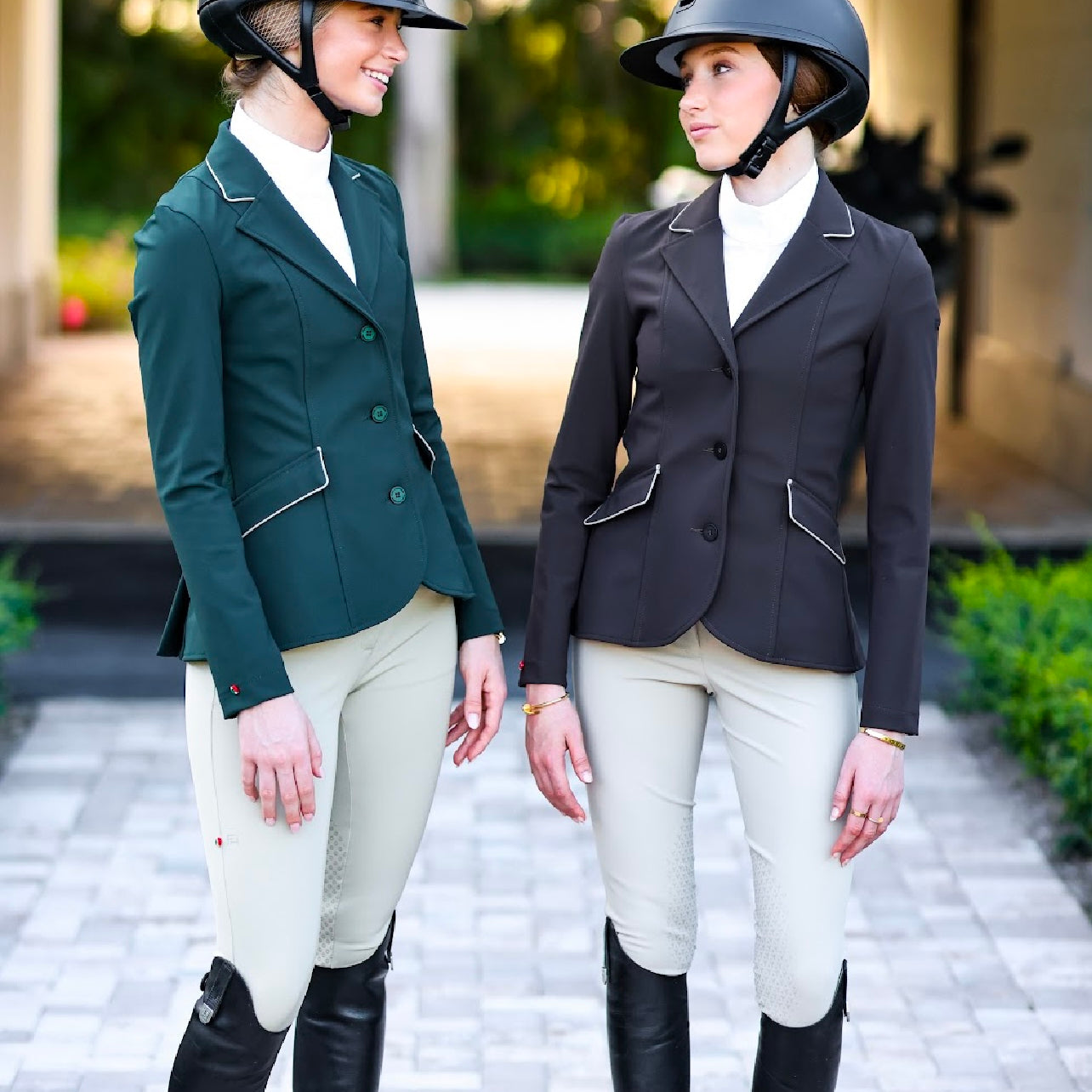
Attire also plays a role. Wearing the correct clothing for your class removes one more thing to think about.
For example:
An impeccable turnout helps you feel prepared before you even enter the ring.
Day-of Strategies: Managing Nerves at the Show
Show day can feel fast-paced and unpredictable, but a few steady habits can help you stay grounded as things unfold.
Morning Routine for Calm
A steady morning sets the tone for your ride.
-
Prioritize Rest: A well-rested rider makes clearer decisions
-
Eat a Balanced Breakfast: Fuel helps stabilize your energy
-
Be Mindful of Caffeine: Too much can increase tension rather than focus
Pro Tip: Arriving early allows you to take in the environment at your own pace before the pressure of warm-up kicks in. That extra time can make the entire day feel more manageable.
Breathing and Relaxation Techniques
Simple breathing and relaxation techniques can help regulate your body before you ride.
-
Box Breathing: Inhale for four, hold for four, exhale for four, and hold for four. Repeat several times before mounting. It activates the parasympathetic nervous system, which signals to your body that it's safe to relax.
-
Grounding Exercise: The 5-4-3-2-1 grounding method is equally powerful. It allows you to focus on what you can see, hear, and feel in the moment. Name 5 things you can see, 4 you can touch, 3 you can hear, 2 you can smell, and 1 you can taste.
-
Muscle Release: Gently tense and relax each muscle group from feet to shoulders. This can help ease physical tension and bring your body back to a more relaxed state.
Pro Tip: Practice these techniques at home or during flatwork so they feel natural and easy to use on show day. These small resets can help bring your focus back to the present.
Warm-Up Wisely
Your warm-up should reflect what your horse needs that day.
-
Pay attention to what helps your horse feel steady and responsive. Some horses need more energy, while others need a quieter approach.
-
Avoid overworking the same issue. If something isn’t clicking, simplify and build from what is working.
-
Comparison rarely helps you ride better. Stay focused on your own ride.
Pro Tip: A calming playlist or a few motivational tracks can shift your mental state faster than almost anything else.
In the Ring: Staying Present
Staying present in the ring helps you ride with clarity and consistency under pressure.
-
Ride One Element at a Time: Don't think about the third fence while you're approaching the first. Ride what's in front of you.
-
Trust Your Training and Preparation: You’ve already done the work — now it’s about riding what you know.
-
Remember to Breathe: Even a small exhale can help reset your position and your focus. Smile if you can; it relaxes your jaw and your entire topline.
Pro Tip: If your mind starts to race, quietly name the next step in your course. It can help bring your focus back to the present.
Tips From Top Equestrians
McLain Ward, one of the most decorated show jumping athletes in American history, consistently cites preparation and mental composure as the foundation of championship performance. His ability to deliver under international pressure is a result of relentless groundwork and a disciplined mental game built over decades.
Trainer Zoie Brogdon puts it simply: "Trust your horse with your life. It's a team effort."
The common thread among elite competitors isn't fearlessness. It's the ability to reframe nerves as readiness and to lean on the partnership they've earned through consistent work.
What to Do When Nerves Overwhelm You
Even with preparation, there are moments when nerves can feel stronger than expected. Having a simple plan for those situations can help you reset quickly and regain control.
Quick Reset Techniques
If nerves build before your class, take a step back.
-
Take a Short Walk: Movement can help regulate your system
-
Talk to Someone You Trust: A calm perspective can steady your mindset
-
Reconnect With Your Horse: Grooming or quiet time can bring you back to the present
If the moment feels like too much, it’s okay to pause. Your well-being, and your horse’s, come first.
Learning From Difficult Moments
Every round gives you something to learn from.
After your ride, take a few minutes to reflect:
Over time, these small reflections build real progress. Confidence grows through experience, not perfection.
Long-Term Strategies for Building Show Ring Confidence
Confidence in the show ring is built over time, not in a single round. The habits you develop across multiple shows influence how you handle pressure and continue to improve.
Gradual Exposure
Start where you feel comfortable and build from there. Smaller, lower-pressure shows can help you gain confidence without added pressure.
Each confident performance reinforces neural pathways and the belief in your ability over time. Even a smooth round at a schooling show is worth acknowledging. Those small wins add up. Don't rush the progression. Move forward at a pace that feels right for you.
Developing a Growth Mindset
Shows are part of the learning process, not a final judgment of your ability.
Focus on steady improvement rather than perfection. Perfection is always shifting, and chasing it can add unnecessary pressure. Consistent progress gives you something clear and meaningful to build on.
Creating Your Pre-Show Rituals
Routines create familiarity. A consistent warm-up, a quiet moment before your class, or even a simple habit you repeat each show day can help steady your mindset.
When your preparation is consistent, and your turnout is polished, you step into the ring with fewer distractions and more confidence.
How JODS Supports Your Show Day Confidence
There's genuine psychology behind dressing for success. What you wear in the ring affects more than appearance. It influences how you feel and how you ride.
Clothing that fits well and moves with you supports your position and keeps your focus where it belongs. When something feels too tight or too loose, it can be distracting, making it harder to stay present.
Choosing well-made pieces that meet the standards of your discipline helps create a clean, composed look. It’s not about excess but rather about feeling prepared and put together.
At JODS, we understand how much preparation goes into each ride. We’ve lived the early mornings, the long show days, and the small details that make a difference.
-
Thoughtfully Curated Apparel: We carry pieces selected for both performance and presentation, helping you build a show wardrobe that feels cohesive and reliable.
-
Designed for Comfort and Movement: Our apparel is chosen to move with you in the saddle, so your clothing supports your ride instead of distracting from it.
-
Built for Real Show Days: From breathable fabrics to tailored fits, every piece is selected with the realities of competition in mind.
Explore our collection of premium equestrian show apparel and discover pieces designed to support confident, composed riding in every class.
Frequently Asked Questions About Being Show Ready
How do you calm down before a horse show?
Use box breathing (inhale for 4, hold for 4, exhale for 4, and hold for 4), arrive early to eliminate rushing, set process-oriented goals for the class, and keep your morning routine consistent. Ground yourself in what you can actually control.
What helps with horse show anxiety?
A combination of thorough preparation, consistent training, visualization and day-of breathing techniques works for most riders. For persistent or severe anxiety, working with a sports psychologist who specializes in equestrian performance delivers meaningful, lasting results.
Is it normal to be nervous before a horse show?
Completely. Even Olympic-level riders experience pre-competition nerves. The goal isn't to eliminate the feeling, it's to interpret it as readiness and channel it into focused, sharp riding.
How do professional riders deal with nerves?
Through ritualized pre-performance routines, deliberate visualization, process-focused goal setting and years of intentional exposure to high-pressure environments. Preparation is the foundation of composure at every level.
What should I do the night before a horse show?
Confirm your packing is complete, mentally ride your round, eat a balanced dinner, limit caffeine after midday, and get to bed at a reasonable hour. The preparation work is already done. Trust it.